Mandala Geometrical Patterns: Harmony, Structure, and Everyday Inspiration
At first glance, a mandala geometrical pattern may seem like an intricate drawing—symmetrical, precise, and quietly mesmerizing. But look closer, and you’ll find something more: a language of balance, repetition, and intention built from circles, squares, triangles, and interlocking forms. Mandala geometrical patterns are not just decorative motifs; they’re visual frameworks rooted in centuries of cross-cultural practice—from Hindu and Buddhist spiritual art to Islamic tilework, Indigenous cosmological diagrams, and modern design systems. Today, they’re gaining renewed attention—not as relics—but as versatile, grounded tools for clarity, creativity, and communication.
What Makes a Pattern “Mandala” and Why Does Geometry Matter?
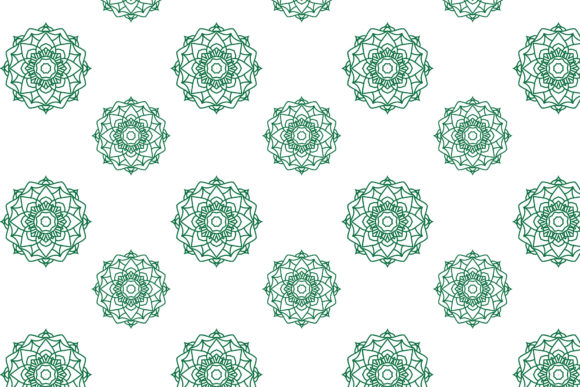
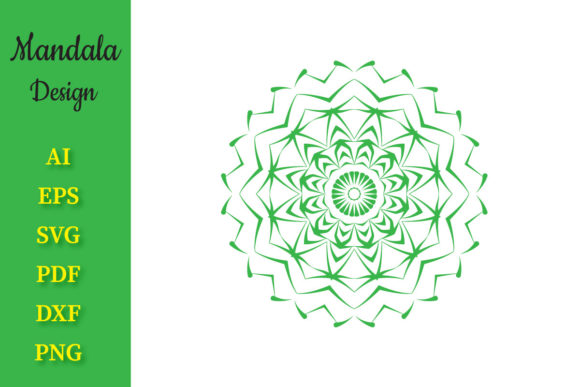
A mandala (Sanskrit for “circle”) is traditionally a symbolic representation of the universe—a microcosm drawn with deliberate symmetry and layered geometry. What distinguishes a mandala geometrical pattern from other repeating designs is its radial or concentric structure, anchored by a clear center point and expanding outward through measured proportions. Unlike random tessellations or abstract wallpaper repeats, mandala geometrical patterns follow logical progressions: 4-fold, 6-fold, or 8-fold symmetry; Fibonacci ratios; sacred geometry principles like the Flower of Life or Sri Yantra; or modular grids that allow scalability without distortion.
This isn’t about rigid dogma—it’s about reliability. Because these patterns obey consistent mathematical relationships, they scale cleanly across mediums: a small icon remains legible when enlarged to a mural; a textile repeat aligns seamlessly on fabric; a digital interface element retains visual harmony at any resolution.
Where Mandala Geometrical Patterns Show Up—Beyond the Obvious
You’ve likely encountered mandala geometrical patterns without realizing it:
- Branding & Identity: Logos for wellness studios, eco-conscious brands, and mindfulness apps often use subtle mandala-inspired layouts—not full ceremonial motifs, but balanced arrangements of dots, rings, or segmented arcs that convey unity and intention.
- Architectural Detailing: From stained-glass windows and mosque domes to modern acoustic ceiling panels, mandala geometrical patterns guide light, sound, and spatial perception through calculated repetition.
- Education & Therapy: Teachers use printable mandala geometrical patterns for visual-spatial exercises; occupational therapists incorporate them into fine-motor skill development; counselors introduce coloring versions to support focus and emotional regulation.
- Digital Design: UI designers apply mandala logic to dashboard layouts—grouping related controls in circular menus, arranging notification hubs around central actions, or building responsive grid systems based on radial breakpoints.
Who Benefits—and How They Use Them Differently
The versatility of mandala geometrical patterns means their value shifts depending on the user’s goals:
- Creatives & Artists: Use them as foundational sketches—tracing over radial guides to explore composition, proportion, and rhythm before committing to freehand work. Many illustrators layer mandala geometrical patterns beneath watercolor or digital linework to add depth and cohesion.
- Business Owners: Apply them in physical spaces—floor inlays, wall murals, or packaging motifs—to evoke calm, professionalism, or cultural resonance without overt symbolism. A café might integrate a simplified 6-point mandala geometrical pattern into its tile floor, subtly reinforcing themes of community and natural flow.
- Educators & Coaches: Leverage them as non-verbal frameworks—for mapping ideas during brainstorming (center = core concept; rings = supporting themes), tracking habit formation (each segment = a day or goal milestone), or guiding group reflection exercises.
- DIY Enthusiasts & Makers: Cut mandala geometrical patterns from wood, vinyl, or paper using laser cutters or craft knives. Their predictable symmetry makes them ideal for beginners learning precision cutting—and satisfying for advanced makers seeking meditative repetition.
Strengths You Can Rely On
Mandala geometrical patterns offer tangible advantages that go beyond aesthetics:
- Predictable Scalability: Because they’re built on proportional systems—not pixel-based randomness—they retain integrity whether printed on a business card or projected onto a building façade.
- Cross-Cultural Resonance: While deeply rooted in specific traditions, their underlying structure—center, balance, expansion—is universally legible. This makes them adaptable for global audiences without requiring explanation.
- Low Cognitive Load: The human eye recognizes symmetry instantly. That means mandala geometrical patterns help users orient themselves quickly in complex environments—like wayfinding signage or app navigation—without conscious effort.
- Modular Flexibility: Many mandala geometrical patterns can be deconstructed into tiles, segments, or vectors—making them easy to customize, animate, or recombine for evolving projects.
Realistic Considerations—When to Lean In (and When to Pause)
Despite their strengths, mandala geometrical patterns aren’t a universal fix. Honest evaluation helps avoid mismatched applications:
Sensitivity matters. While simplified forms are widely accepted, directly replicating sacred mandalas—especially those tied to living religious practices—requires contextual awareness and, ideally, consultation with cultural practitioners. Respectful adaptation focuses on structural logic, not ritual replication.
Complexity has limits. Highly detailed mandala geometrical patterns can overwhelm small-scale applications (e.g., favicons or mobile buttons) or low-resolution print. Always test legibility at intended size and medium.
Not all symmetry feels inclusive. Some audiences associate rigid geometry with formality or exclusion. Introducing subtle organic variation—softened edges, hand-drawn linework over geometric scaffolding, or asymmetric color accents—can preserve structure while adding warmth and approachability.
How to Assess Fit for Your Project
Before selecting or designing a mandala geometrical pattern, ask yourself three practical questions:
- What’s the primary function? Is it decorative? Structural (e.g., guiding layout)? Symbolic? Functional (e.g., aiding memory or navigation)? Match the pattern’s complexity and clarity to that role.
- Where will it live—and how will people interact with it? A pattern meant for embroidery needs stitch-friendly spacing; one used in AR experiences benefits from vector scalability and clean anchor points for animation.
- Do you need consistency—or evolution? If your project spans multiple touchpoints (website, packaging, signage), choose a mandala geometrical pattern that can be simplified, cropped, or recolored without losing recognizability. Look for one with strong core geometry—not just ornate surface detail.
Try sketching a basic version by hand first: draw a circle, divide it into 4 or 6 equal sections, then build outward with simple shapes—dots, lines, crescents. Notice how even minimal iterations create rhythm and focus. That’s the power of mandala geometrical patterns—not in perfection, but in purposeful order.
A Quiet Tool With Wide Reach
Mandala geometrical patterns don’t shout. They settle. They organize. They invite attention without demanding it. Whether you’re choosing a background for a presentation slide, planning a garden layout, developing a brand system, or simply seeking a grounding visual rhythm in daily life, these patterns offer more than decoration. They offer structure with soul—geometry that remembers it’s made for people.
Start small. Print a basic 8-fold template. Trace it. Rotate it. Color one ring. Then another. See what emerges—not just on the page, but in your thinking. That’s where the usefulness of mandala geometrical patterns begins: not as finished artifacts, but as quiet partners in making sense of complexity—one balanced line at a time.