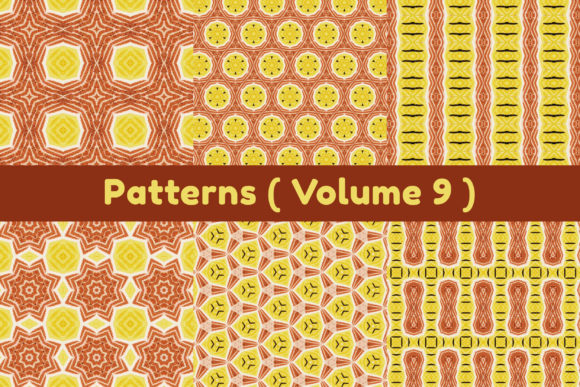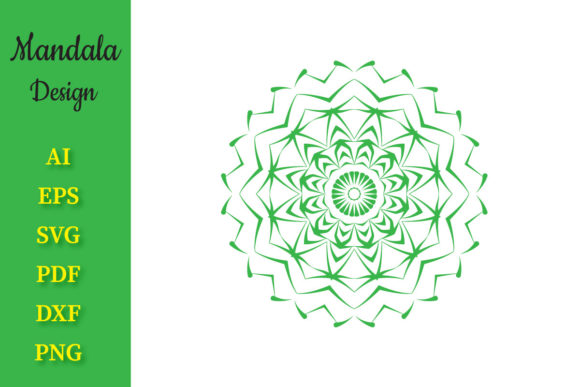
Mandala Design for Patterns Vol.16: A Practical Evaluation for Pattern Designers
Mandala Design for Patterns Vol.16 is a curated digital pattern resource focused on symmetrical, radial compositions rooted in mandala traditions. Unlike generative AI tools or broad clip-art libraries, it offers hand-crafted, vector-based motifs designed specifically for repeatable surface pattern applications—such as textiles, wallpaper, stationery, and digital illustration assets. It is part of an ongoing series, with each volume building on prior themes while introducing new stylistic variations, color palettes, and structural complexity.
This volume features 48 original mandala motifs, delivered in scalable SVG and EPS formats, accompanied by seamless tile templates and documented color variants. Each design includes layered source files (where applicable) to support customization, and metadata indicating symmetry type (e.g., 8-fold, 12-fold), repeat compatibility, and recommended scale ranges. It is distributed as a downloadable digital product—not a subscription service or plugin—and requires no specialized software beyond standard vector editing tools like Adobe Illustrator or Affinity Designer.
Why Designers Explore Mandala Design for Patterns Vol.16
Designers often seek Mandala Design for Patterns Vol.16 for specific, practical reasons—not general inspiration, but targeted utility. These include:
- Time-efficient prototyping: When developing textile collections or packaging systems, having pre-tested, repeat-ready mandalas reduces the time needed to construct balanced radial repeats from scratch.
- Consistency across projects: The volume’s cohesive stylistic language—refined line weight, intentional negative space, and harmonized proportions—supports brand-aligned visual continuity without requiring extensive art direction.
- Learning through structure: For designers still mastering symmetry, tessellation, or motif scaling, the included technical notes and tile guides serve as applied references—not just assets, but pedagogical tools.
- Licensing clarity: Its commercial-use license covers both personal and client work, including physical products and digital distribution, with no attribution requirement—a key consideration for professionals managing multiple clients.
Benefits and Realistic Tradeoffs
The primary benefit of Mandala Design for Patterns Vol.16 lies in its specificity. Because it focuses exclusively on mandala-derived patterns—not florals, geometrics, or abstracts—it delivers depth where others offer breadth. Designers gain immediate access to motifs that already resolve common challenges: rotational balance, edge alignment in repeats, and optical weight distribution across radial axes.
However, this focus entails tradeoffs. The collection does not include raster textures, photorealistic elements, or trend-driven colorways beyond its defined palette set. It also assumes baseline vector-editing proficiency; users unfamiliar with path manipulation or tile setup will need to invest time in learning those skills separately. Additionally, while the motifs are highly customizable, they are not algorithmically adjustable—changing symmetry order or core structure requires manual redrawing, not parameter sliders.
Another consideration is scope. At 48 designs, Mandala Design for Patterns Vol.16 is intentionally selective—not exhaustive. It prioritizes versatility over volume, meaning some users seeking niche variations (e.g., minimalist linocut-style mandalas or high-contrast Art Deco interpretations) may find gaps. That selectivity reflects a design philosophy rather than a limitation: each motif is intended to serve multiple applications, not one narrow use case.
When It Aligns Well With Your Needs
Mandala Design for Patterns Vol.16 is a strong fit if your work regularly involves:
- Surface pattern development for fabric or wallcoverings, especially where symmetry, repetition, and cultural resonance (e.g., wellness, mindfulness, or heritage-inspired lines) are central to the brand narrative.
- Educational or workshop settings, where clear, well-documented examples help learners grasp principles of radial symmetry, motif isolation, and repeat construction.
- Branded merchandise programs requiring consistent, scalable iconography—particularly for sectors like yoga apparel, holistic wellness, or boutique publishing.
- Tight production timelines, where starting from proven, tested motifs reduces iteration cycles compared to generating concepts entirely in-house.
In these contexts, the volume functions less as a “design shortcut” and more as a validated component library—similar to how a UI designer might rely on a well-structured icon set rather than drawing every glyph anew.
When Alternatives May Be More Appropriate
Consider alternatives if your goals emphasize:
- Dynamic variation: Tools like Adobe Pattern Maker or dedicated generative plugins allow real-time adjustment of symmetry, density, and color rules—useful when exploring many iterations rapidly, though often at the cost of fine-grained control.
- Broad stylistic range: Generalist pattern libraries (e.g., Creative Market bundles or Shutterstock’s curated vector sets) offer mandalas alongside damasks, ikats, and watercolor florals—valuable for designers building diverse portfolios or serving varied clients.
- Photographic or textured realism: If your projects require scanned inkwork, hand-painted grain, or organic imperfection, vector-based mandalas—even high-quality ones—will need supplemental texture layering, which adds steps outside the volume’s scope.
- Collaborative or team-wide asset management: Since Mandala Design for Patterns Vol.16 is a static download, it lacks cloud syncing, version history, or permission controls offered by platforms like Frontify or Knack.
Making a Practical Decision
To determine whether Mandala Design for Patterns Vol.16 aligns with your goals, ask three questions:
- Do you need mandalas—or just patterns? If symmetry and radial structure are essential to your concept, this volume delivers precision. If you’re open to other forms of repetition (e.g., half-drop, brick, or organic scatter), broader resources may offer more flexibility.
- What’s your current workflow bottleneck? If constructing seamless repeats manually slows you down, the included tile templates and repeat notes provide measurable time savings. If your challenge is conceptual ideation—not technical execution—then studying the motifs as references may be more valuable than licensing them outright.
- How much customization do you realistically need? The layered vector files support meaningful adaptation (e.g., recoloring, resizing, combining elements), but not structural reinvention. Assess whether your typical revisions stay within those boundaries.
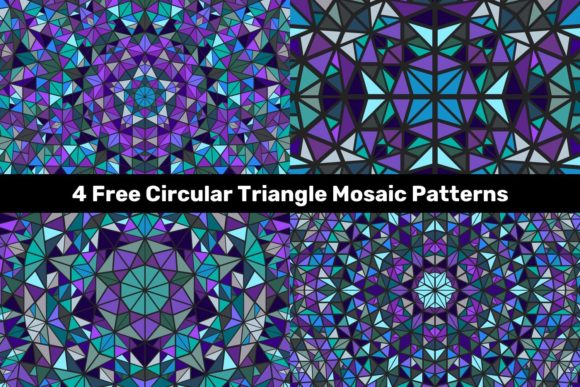
Finally, review the preview images critically—not for aesthetic appeal alone, but for functional traits: Are line weights consistent across scales? Do motifs maintain clarity at small sizes (e.g., for embroidery or labels)? Do the color variants suggest adaptable palettes for your typical clients? These observations matter more than subjective preference when evaluating long-term utility.
Mandala Design for Patterns Vol.16 serves a defined role in the pattern design toolkit: it provides rigorously crafted, technically sound mandala motifs for practitioners who value intentionality over abundance. It won’t replace foundational design skills—but for those already applying them, it can streamline execution, reinforce best practices, and extend creative capacity where symmetry and repetition are central to the work.