Hand Painted Garden - Seamless Patterns
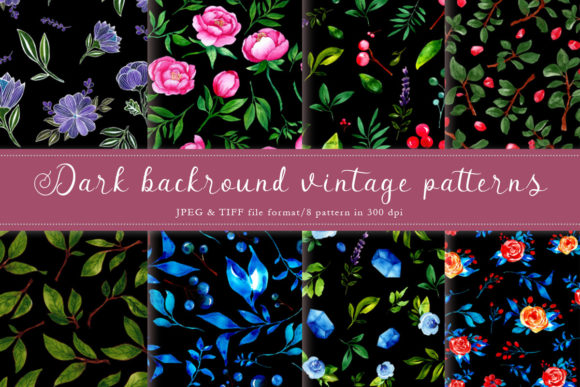
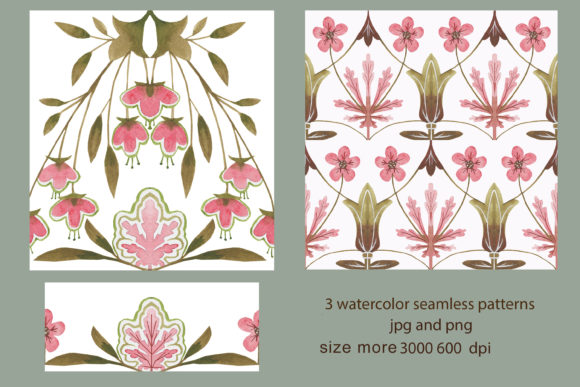
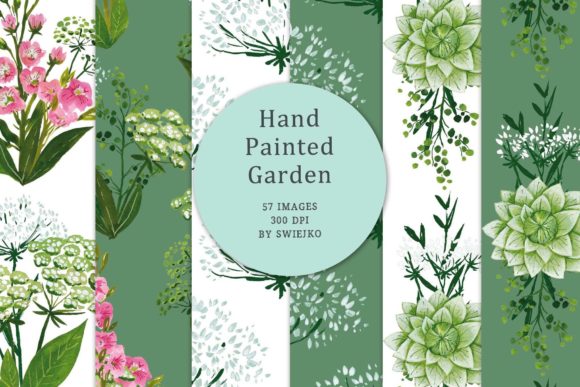
Hand Painted Garden - Seamless Patterns is a curated collection of original, hand-crafted botanical motifs designed to tile infinitely—without visible seams or repetition fatigue. Unlike algorithmically generated textures or stock vector repeats, these patterns retain the warmth, irregularity, and tactile nuance of real brushstrokes: subtle watercolor bleeds, uneven ink lines, slight pigment granulation, and organic leaf shapes that shift gently across the repeat grid. That distinction matters—not as aesthetic trivia, but as functional leverage.
Why Seamless Isn’t Just About Tiling—It’s About Intentional Repetition
Seamless patterns are often treated as background utilities—something to “fill space” in a slide deck or wrap a product mockup. But Hand Painted Garden - Seamless Patterns operates at a higher strategic tier because its hand-painted origin introduces controlled variation within consistency. That duality supports goals where trust, authenticity, and human resonance matter: brand identity systems for eco-conscious startups, educational materials for nature-based curricula, editorial design for sustainability publications, or packaging for small-batch herbal goods.
Consider a freelance educator developing a printable workbook on native plant identification. Using a rigid geometric pattern might signal precision—but not warmth or approachability. A generic floral repeat could feel impersonal or dated. Hand Painted Garden - Seamless Patterns offers middle ground: structured enough for visual cohesion, expressive enough to signal care and craft. The result isn’t just decoration—it’s contextual alignment.
Strategic Use Cases Across Roles
Different roles engage with Hand Painted Garden - Seamless Patterns for distinct outcomes—not because it’s “trendy,” but because it solves specific problems:
- Small business owners use it to unify digital and physical touchpoints—e.g., applying the same pattern to invoice backgrounds, email headers, and compostable packaging labels—creating continuity without monotony.
- Content creators and bloggers embed it into Pinterest pin templates or Notion dashboard headers to reinforce thematic focus (e.g., slow living, regenerative gardening) without needing custom illustration each time.
- Educators and curriculum designers integrate scaled-down versions into worksheets or interactive PDFs, where gentle botanical texture supports focus without competing with text—unlike high-contrast or busy digital patterns.
- Freelance designers treat it as a foundational layer when building brand systems for clients in wellness, horticulture, or artisan food—reducing time spent sourcing or illustrating bespoke repeats while preserving artisanal credibility.
Planning Your Use: Three Practical Filters
Before applying Hand Painted Garden - Seamless Patterns, ask three questions—not to limit creativity, but to sharpen impact:
- What outcome does this repetition serve? If the goal is clarity (e.g., a step-by-step guide), choose lighter, sparser variants with ample negative space. If the goal is immersion (e.g., a meditation app background), opt for denser, layered variants with soft color transitions.
- Where will this scale—and how will legibility hold? A pattern that reads beautifully at 200% zoom in a Keynote slide may dissolve into visual noise at 12pt in a printed booklet. Test at actual output size—not just on screen.
- Does this support—or compete with—your core message? In customer-facing materials, patterns should recede gracefully. If users pause to admire the leaves instead of reading your value proposition, the pattern is too dominant for that context.
Realistic Integration Tips
Start small. Apply Hand Painted Garden - Seamless Patterns to one high-impact, low-risk surface first: a newsletter divider, a section background in a pitch deck, or the inner margin of a PDF report. Observe how it changes perception—not just aesthetics. Does it soften tone? Add quiet authority? Signal care in execution?
Pair intentionally. These patterns thrive alongside clean, humanist typefaces (e.g., Lora, IBM Plex Serif) and restrained color palettes—especially muted greens, warm taupes, soft ochres, or slate blues. Avoid clashing with neon accents or ultra-thin sans-serifs unless contrast is the deliberate goal.
Modify selectively—not destructively. Most licensed versions include editable source files (AI, PSD, SVG). Adjust hue, saturation, or spacing to match brand guidelines—but preserve the underlying brushwork integrity. Over-smoothing or heavy recoloring risks erasing the very quality that makes Hand Painted Garden - Seamless Patterns distinctive.
Risks of Context-Free Use
Using Hand Painted Garden - Seamless Patterns without clear purpose invites misalignment. A law firm deploying lush garden repeats across legal contracts may unintentionally undermine perceptions of rigor. A tech SaaS dashboard using delicate watercolor vines behind data tables can impair scanability and accessibility. The pattern itself isn’t flawed—it’s mismatched to the functional demand.
More subtly, overuse dilutes differentiation. When every eco-brand uses nearly identical hand-painted foliage, the pattern stops signaling authenticity and starts signaling conformity. That’s not a limitation of Hand Painted Garden - Seamless Patterns—it’s a warning about deployment without strategy.
Long-Term Value: Beyond Decoration to Design Infrastructure
Think of Hand Painted Garden - Seamless Patterns not as static assets, but as adaptable infrastructure. With thoughtful licensing, you can legally adapt, layer, and combine variants across platforms and timelines—building visual equity over months or years, not just for one campaign.
For example, a community garden nonprofit might begin by using a single vine-repeat pattern on volunteer sign-up forms. Six months later, they layer a second variant—this one with seed pods—as a subtle watermark on grant reports. A year in, they animate a simplified version for social media stories, keeping motion gentle and rooted in the original stroke rhythm. Each use feels connected—not because it’s identical, but because it’s coherently evolved.
This kind of longitudinal coherence reduces future design labor. You’re not starting from zero each time. You’re drawing from a shared vocabulary—one grounded in hand-made authenticity, not algorithmic convenience.
When to Pause and Reassess
Reconsider using Hand Painted Garden - Seamless Patterns if:
- Your audience prioritizes speed, clarity, or technical precision over warmth (e.g., enterprise software documentation, medical device instructions).
- You lack control over final output conditions—such as third-party print vendors with inconsistent color calibration—where subtle watercolor shifts may render unpredictably.
- Your brand voice is deliberately stark, industrial, or futuristic; introducing organic texture without counterbalance can create dissonance rather than depth.
None of these are flaws in the pattern—they’re signals that your current objective calls for different tools. Strategic restraint is part of mastery.
Final Observation: Pattern as Quiet Strategy
In a landscape saturated with AI-generated visuals and templated design, Hand Painted Garden - Seamless Patterns offers something rarer: evidence of human judgment applied at scale. Each repeat reflects decisions about line weight, pigment density, spacing rhythm, and botanical accuracy—not just aesthetic preference, but intentionality made visible.
That makes it especially valuable for professionals who must balance efficiency with authenticity: educators building trust with learners, founders communicating values before features, freelancers differentiating on craft rather than speed. It won’t replace writing, research, or user testing—but it can quietly reinforce what those efforts stand for.
The most effective use isn’t the flashiest. It’s the one that goes unnoticed as “design”—and felt instead as consistency, care, and quiet confidence.