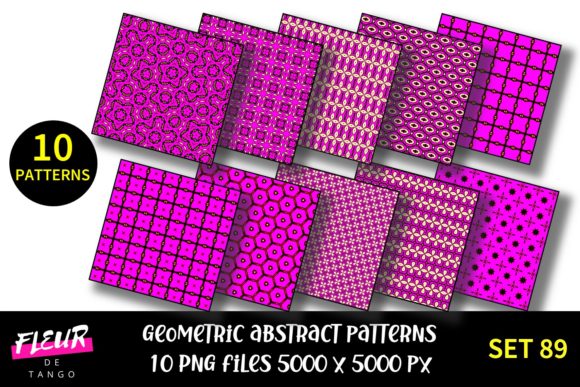
Geometric Patterns Digital Paper Set 89: Precision, Versatility, and Quiet Confidence in Design
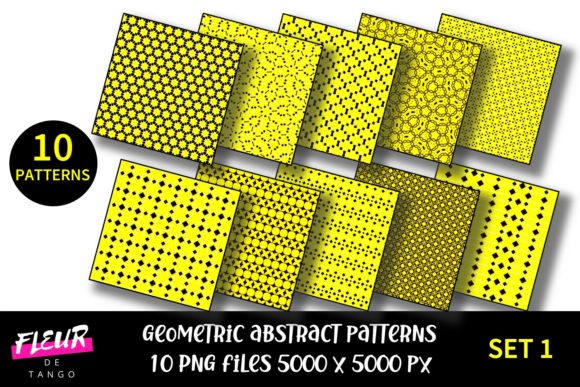
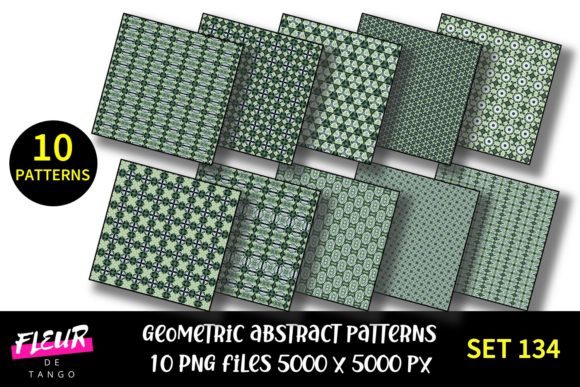
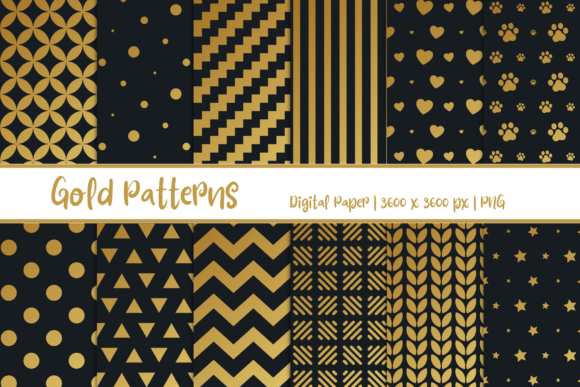
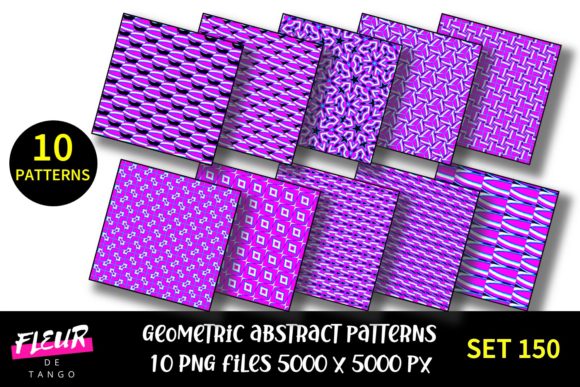
Geometric Patterns Digital Paper Set 89 isn’t another “trend-chasing” bundle—it’s a quietly capable toolkit built for people who value consistency, clarity, and control. Comprising 12 high-resolution (300 DPI), seamless, tileable digital papers—each with crisp lines, balanced negative space, and restrained color palettes—it bridges the gap between minimalist aesthetics and functional design needs. Unlike overly saturated or algorithmically generated pattern sets, this collection reflects deliberate composition: isometric grids, subtle tessellations, interlocking polygons, and rhythmic line work—all optimized for real-world use across print and digital workflows.
Why This Set Fits Modern Creative Rhythms
Today’s professionals aren’t just choosing patterns—they’re selecting tools that align with how they actually work. Remote collaboration, rapid prototyping, and multi-platform publishing mean assets must be lightweight, adaptable, and predictable. Geometric Patterns Digital Paper Set 89 delivers exactly that: no extraneous layers, no licensing ambiguity, no resolution surprises. Each paper is delivered as a PNG with transparent background and a matching JPEG—ready for immediate drag-and-drop into Canva, Adobe InDesign, Figma, or even Notion templates.
This responsiveness matters most when time is non-renewable. A freelance educator building printable lesson planners doesn’t need to spend 45 minutes adjusting scale or contrast—just pick Pattern #7 (a low-contrast hexagonal grid) and apply it as a subtle background layer behind student activity cards. A small-business owner designing a product launch email? Pattern #3—a clean diagonal stripe—adds visual structure without competing with copy. No tutorials required. No guesswork.
From Decoration to Design Infrastructure
Geometric patterns have evolved beyond wallpaper or surface embellishment. They now serve as structural scaffolding—guiding eye movement, reinforcing brand tone, and signaling intentionality. Think of them less as “decoration” and more as silent collaborators in communication.
Consider how educators use patterned backgrounds in slide decks: a soft triangular motif subtly reinforces concepts of stability and hierarchy; a repeating diamond grid supports modular lesson layouts. Or how service-based freelancers integrate these papers into proposal PDFs—not as flair, but as quiet cues of precision and attention to detail. Geometric Patterns Digital Paper Set 89 supports that shift because its designs avoid visual noise. There’s no gradient overload, no forced “vintage” texture, no arbitrary embellishment. What remains is rhythm, proportion, and purpose.
How Changing Expectations Are Reshaping Pattern Use
User expectations have quietly tightened. Audiences scroll faster, skim deeper, and notice inconsistencies instantly. A mismatched pattern scale on a social media graphic, or a blurry repeat on a printed business card, doesn’t read as “quirky”—it reads as unpolished. That pressure has shifted demand away from quantity toward quality: fewer, better-vetted assets that behave consistently across contexts.
Simultaneously, accessibility awareness is rising—not just in color contrast, but in cognitive load. Overly dense or irregular patterns can unintentionally distract or fatigue readers, especially those with ADHD or visual processing differences. Geometric Patterns Digital Paper Set 89 responds by favoring open compositions, moderate repetition frequency, and clear figure-ground relationships. Pattern #11, for example, uses widely spaced parallel lines at a gentle 15-degree angle—functional as a divider or subtle backdrop, never overwhelming.
Practical Integration Across Roles
The strength of Geometric Patterns Digital Paper Set 89 lies in its frictionless integration—not in novelty, but in reliability. Here’s how different users apply it without reinventing their process:
- Bloggers and content creators use Pattern #5 (a fine dotted grid) as a base layer beneath quote graphics—adding depth without obscuring text legibility.
- Small business owners embed Pattern #1 (a tight square lattice) into invoice headers or order confirmation pages, reinforcing professionalism through subtle repetition.
- Educators convert Pattern #9 (an offset triangle repeat) into printable graph paper alternatives—ideal for spatial reasoning exercises or sketch-based note-taking systems.
- UX designers and product teams test interface hierarchy by applying Pattern #4 (a soft concentric circle motif) behind dashboard cards—revealing whether information grouping feels intuitive or cluttered.
- Print-on-demand sellers combine Pattern #8 (a minimalist chevron) with neutral-tone photography for cohesive product mockups—no need for custom illustration or complex masking.
None of these uses require advanced software skills. They rely instead on recognizing when a geometric motif supports—not competes with—the message or function at hand.
Tech-Enabled Simplicity, Not Complexity
Modern design tools make pattern application easier than ever—but only if the asset itself is built for interoperability. Geometric Patterns Digital Paper Set 89 avoids common pitfalls: no embedded fonts, no layered PSD files requiring version-specific software, no RGB-to-CMYK conversion headaches. Every file is flat, scalable, and color-managed for both screen and print fidelity.
That technical simplicity becomes especially valuable as more professionals adopt hybrid workflows—designing in Figma, exporting for print via Canva, then repurposing elements for Instagram carousels. A pattern that looks sharp at 100% zoom in a desktop app should also hold clarity when scaled down to thumbnail size on mobile. The set’s consistent 4000×4000 px dimensions and clean anti-aliasing ensure that continuity.
Not Just for “Designers”—A Tool for Clear Thinking
There’s a quiet logic to geometry that resonates beyond aesthetics. Lines, angles, symmetry—these are the language of structure, planning, and systems thinking. That’s why professionals outside traditional creative roles find utility here: project managers use Pattern #2 (a stepped linear progression) as a visual metaphor in roadmap presentations; financial advisors apply Pattern #6 (a balanced radial array) to illustrate portfolio diversification; even therapists incorporate Pattern #10 (a gentle wave-like polygon repeat) into printable grounding exercises—its predictability offering calm without rigidity.
This cross-role relevance isn’t accidental. It reflects a broader shift: visual tools are no longer siloed in marketing departments. They’re part of everyday communication infrastructure—like typography or white space. Choosing a geometric pattern is increasingly about expressing clarity of thought, not just visual preference.
A Realistic View of Longevity and Adaptation
No digital asset lasts forever—but some age more gracefully. Geometric Patterns Digital Paper Set 89 leans into timelessness by avoiding fads: no neon gradients, no distressed textures, no AI-generated “glitch” motifs. Its palette stays within muted, natural-leaning tones—slate greys, warm taupes, soft indigos—that harmonize with evolving brand guidelines rather than clash with them.
That doesn’t mean it’s static. Users regularly adapt these papers—lightening opacity for overlays, inverting colors for dark-mode versions, or combining two patterns (e.g., overlaying Pattern #3’s diagonal lines over Pattern #7’s hex grid) to create custom textures. The set invites iteration, not replacement.
What makes it sustainable isn’t novelty—it’s neutrality paired with precision. It works because it doesn’t try too hard to be noticed. It simply serves.
Getting Started Without Overthinking
If you’re new to using digital papers, start small: replace one generic white background in a recurring document—say, your weekly team meeting agenda or client onboarding checklist. Try Pattern #12, a sparse linear dot grid, at 8% opacity. Notice how it adds quiet rhythm without demanding attention.
For seasoned users: experiment with blending modes. Multiply Pattern #4 over a photo to deepen shadows; use Overlay with Pattern #1 to reinforce structure in data-heavy slides. These aren’t “tricks”—they’re ways to let geometry do quiet work alongside your content.
Geometric Patterns Digital Paper Set 89 won’t solve every design challenge. But it reliably solves a specific, frequent one: the need for visual cohesion that doesn’t compete with meaning. And in an era where attention is scarce and trust is earned through consistency, that kind of quiet competence is increasingly rare—and increasingly valuable.